Good Sleep

Cicada or Circada? Jiminy Crickets! I love listening to crickets at night!

When it comes to good sleep, a balanced Circadian Rhythm is a corner stone for optimal health; it is the body’s 24 hour sleep/wake cycle. A disrupted circadian rhythm leads to poor cortisol rhythm. Cortisol, often referred to as the stress hormone, is also involved in sleep/wake cycles, blood pressure regulation, immune function, inflammatory response, energy and glucose metabolism, and memory formation. Normal cortisol rhythms peak in the morning around 6 am and lessen in the evening. Disrupted cortisol rhythm may lead to insomnia, depression, blood glucose issues, mood disorders, Bipolar, Diabetes 2 and Diabetes 3 (aka Alzheimer). Genetics, lifestyle, stress, and trauma all influence circadian rhythms

If you listen to your body’s natural cues regarding when to go to sleep and wake up, your circadian rhythm should stay balanced, but a change in your schedule can disrupt your body clock. Follow these tips to keep circadian rhythm in balance:

CONSISTENT SLEEP SCHEDULE
A regular bedtime is key but waking up at the same time daily will also help keep your circadian rhythm in check. It may be tempting to sleep in on weekends but doing so can throw off your body clock during the week.

LIGHT EXPOSURE

Let the sunshine in! Go for a morning walk or do your Tia Chi or Yoga outside. Morning exposure to the sun, gives you an energy boost and signals your brain that it’s time to start the day! Limit the amount of time you wear your sunglasses too. (sun gets to the brain via retina)

Other Light Resources: 10,000 Lux Light Boxes or Full Spectrum light bulbs. Delivered for 20 – 30 minutes in the AM – or 5-10 min if one has Bipolar Disorder

LIMIT EVENING TECH
Bright light in the evening hours confuses your brain into thinking it’s still daytime. Artificial blue light (laptops, tablets and cell phones etc) is the worst culprit, so try to power-down tech devices at least two to three hours before bed. If not, then use Blue Light Blocking Glasses at night – an hour before falling asleep.

MOVE YOUR BODY
Especially for those of us who have sedentary lifestyles! Timing is important. If you exercise within 2 hours of bedtime it may elevate nervous system activity and interfere with sleep onset. Aerobic exercise before 3pm. If you have an active lifestyle or job, that counts as moving your body!

YOGA –important for breathing/stretching and positive assistance in sleep apnea. Try the 5 Minute Yoga Flow before bedtime

GOOD SLEEP BEGINS BEFORE BEDTIME:

Watch your stress level. Carrying worry, irritation, and small stuff throughout the day and flopping into bed mentally exhausted is not a recipe for a good night’s sleep. Good habits during the day will aid you in a good night’s rest.

MINDSET:
What is your relationship with bedtime and sleep? How do you think during the day? Do you feel anxious and upset about sleeping? “I can’t sleep” “I know I won’t sleep tonight” Your mind, does what you tell it to. Try feeling more neutral about it. Think to yourself, “I’m looking forward to bedtime tonight” “I can fall asleep easily” Set an intention during the day to sleep; visualizing yourself sleeping soundly and let yourself feel the emotion of what it would be like; restful, relaxed, peaceful etc. This assists in forming a new neural pathway in the brain. Yes – “fake it till you make it” helps. I have learned to embrace bouts with insomnia, and just use that time to rest my body. If I don’t fall into a deep sleep, I don’t get stressed or anxious. I accept that I will lay here and “rest”. I often put on headphones and listen to my favorite sleep hypnosis or ASMR, Rain sounds, or ambient music. If I am dealing with a particular challenge, I listen to some sleep hypnosis or guided meditation tracks.

REDUCE STIMULANTS

Caffeine: Avoid Caffeine 6-8 Hours Before Bedtime
Caffeine disturbs sleep, even in people who do not think they experience a stimulation effect. Individuals with insomnia are often more sensitive to mild stimulants than are normal sleepers. Caffeine is found in coffee, tea, soda, chocolate, and many over-the-counter medications. A Healthy substitution for morning coffee is a Mocha Matcha Smoothie (see resources)

Nicotine: Avoid Nicotine Before Bedtime
Although some smokers claim that smoking helps them relax, but nicotine is a stimulant. The initial relaxing effects occur, but as the nicotine builds in the system it produces an effect similar to caffeine.

STABILIZE BLOOD SUGAR

Alcohol: Avoid Alcohol After Dinner

Alcohol often promotes the onset of sleep, but as alcohol is metabolized sleep becomes disturbed and fragmented, and you won’t fall into REM which is the restorative stage of sleep. Thus, a large amount of alcohol is a poor sleep aid and should not be used as such.

Eat a Small Snack Before Bed;

Insomnia is not just about not being able to fall asleep. It may be about waking up in the middle of the night when blood sugar drops. Are you waking suddenly at 2 or 4 am? If so, it may be a sudden drop in glucose. Eat a small snack Such as Dr. Korn’s Sleepy time Oats or a Cherry Chamomile Smoothie with protein and carb before bed (see resources)

BEDROOM ENVIRONMENT:

Sleep in complete darkness and temperature 60 – 65 degrees. A quiet environment if possible, noises can be masked with background white noise or with earplugs. Bedrooms may be darkened with black-out shades or sleep masks can be worn. Be sure your mattress and your pillow suit your comfort. Restrictive tight clothing does not promote good sleep.

Clear the clutter. Clutter in the bedroom will activate the mind. Bedrooms should be used for their intended purpose. Think calm, tranquil, restful.

RELATIONSHIP:

The GOAL is sleep. It’s not about the relationship. Don’t buy into the pressure that if you’re not sleeping together your relationship is in trouble. Don’t make a big deal out of sleeping in a different bed. I will guarantee you if you don’t get sleep night after night – you won’t be a nice person and it WILL negatively impact your relationship.

Sometimes our partners have different sleep habits; some like watching tv while falling asleep some need it quiet. Some snore or flip flop. Some like it hot, some like it cold! Find a way to negotiate without making someone the bad buy. If need be, sometimes this is where you kiss goodnight and go sleep in another area.

Don’t have heavy conversations when the head hits the pillow; that’s not the time. Don’t go to bed angry “don’t let the sun go down upon your wrath”. you may not have something resolved, but don’t go to bed angry.

NUTRITIONAL THERAPIES

NUTRIENTS

  • Melatonin .5 – .75 mg – to be taken an hour before bed
  • Vitamin B-12 (methylcobalamin) – take in AM
  • Lithium Orates (natural mineral) 5 – 20 mg/day – take in AM

    Note on Melatonin: levels drop as we age, it only aids in sleep does not PUT us to sleep. Possible side effects: gastrointestinal disturbances, lethargy, hung over feeling in AM and Exacerbation of symptoms in people with depression.

  • Lactium: milk biopeptide
  • Magnesium – Magnesium in the form of Epsom Salt Bath or foot soak or
  • Topical Magnesium Lotion – good for muscle cramp relief

HERBAL MEDICINES.

  • Valerian, Hops and Passionflower – the 3 sisters of sleep. (take in tea or pill form) or get hops in ½ C dark beer.
  • Licorice Root – Essential herb not the candy! LR is a Mild anti-viral and mild anti-inflammatory. (It can also be water retentive and exacerbate High BP so use sparingly). One way you can take Licorice Root is with Polarity Tea (see resources)

A note on “Sleeping Pills”

Sleep medications are effective only temporarily. Scientists have shown that sleep medications lose their effectiveness in about 2 – 4 weeks when taken regularly. Over time, sleeping pills actually can make sleep problems worse, and withdrawal from the medication can lead to an insomnia rebound. Keep use of sleep pills infrequent, but don’t worry if you need to use one on an occasional basis.

RESOURCES

The following Recipes are from Dr. Leslie Korn Eat Right Feel Right book.

POLARITY TEA

Drink in the AM to have a positive effect by nighttime.

Ingredients:

  • 1 oz. licorice root (pieces)
  • 1 oz. fennel seed
  • 1 oz. fenugreek seed
  • 2 oz. flax seed

DIRECTIONS: – Mix the ingredients together while dry. Take 1 tsp. of the mixture and simmer it in approximately 2 cups water. Strain and drink. The recommended dosage is 2 cups per day

MOCHA MATCHA SMOOTHIE Morning Recipe (substitution for Coffee)

Natural stimulant for morning beverage. A little coffee, lifts mood and resets circadian rhythm. Cocoa supports dopamine and focus – and polyphenols which reduce inflammation. Matcha has Theanine which lowers anxiety naturally.

INGREDIENTS:

  • 12 oz fresh brewed organic coffee, hot
  • ½ C full fat unsweetened coconut milk
  • ½ tsp Organic Matcha Powder (or tea / 3 matcha tea bags)
  • 4 Tbs unsweetened organic cocoa powder (for drinking)
  • 5-10 drops of liquid stevia (or to taste)
  • Vanilla extract (optional)
  • Coconut cream, unsweetened (optional)

DIRECTIONS:

Place all ingredients in a blender at medium speed for a few minutes till frothy. Pour into mug and top with coconut cream if desired. For children – substitute berries and almond milk for the coffee. Makes 4 Servings

SLEEPY TIME OATS – Oats are a perfect late night snack for relaxation and sleep. The oats are anxiolytic and walnuts provide some fat and protein to keep blood sugar stable through the night. Add just a few raisins for some sweetness. You can cook up the Oats ahead of time and then add walnuts and raisins.

CHERRY CHAMOMILE SLUMBER SMOOTHIE

make 1 -2 hours before you want to sleep. Cherries and Chamomile tea help induce sleep – Cherries stimulate melatonin release. Mangoes, seeds and coconut support blood sugar and brain function throughout the night so you can rest peacefully. Blueberries or frozen bananas make a good substitute for mangos.

INGREDIENTS:

  • 1 Cup almond or coconut milk
  • ½ C strong cold Chamomile tea
  • 1 C frozen (or fresh) cherries
  • 1 C frozen mangos (or other berries)
  • 1 tsp flax seeds (or flax seed oil)
  • ½ tsp chia seeds
  • 1 Tbs Coconut cream or coconut oil
  • 3 drops liquid stevia
  • 1 drop vanilla extract (optional)

DIRECTIONS:

Place all ingredients in a blender and blend till smooth. Keep a quart of strong chamomile tea in the fridge or make “chamomile tea ice cubes” to add to evening smoothies.

References:

Leslie Korn Nutrition Essentials for Mental Health

Sleep foundation.org

https://www.livestrong.com/article/13726321-5-minute-yoga-for-sleep/

Yes it’s Halloween, but the real “Bad Guys” are closer than you think!

 I’m talking about the chemicals that could be lurking in the popular food, health and beauty and household products in your home. Some of these “bad guys” not only cause cancers and chronic illness, but also contribute to depression, anxiety, learning disabilities, and behavior problems.    To understand how, First lets  take  look at main systems of the body.   Stay with me.  This foundation is important!

NERVOUS SYSTEM

The nervous system is a  network of nerves and cells that carry messages to and from the brain and spinal cord to various parts of the body. It includes both the Central nervous system and Peripheral nervous system.  The central nervous system is made up of the brain, spinal cord and optic nerve.  It controls thought process, movement, and registers sensations in the body.   According to Johns Hopkins, a CNS disorder can affect either the brain or spinal cord, resulting in neurological or psychiatric disorders.

IMMUNE SYSTEM

Our immune system protects the body from foreign substances and pathogenic organisms.  An important part of this system is the lymphatic system. Basically, an autoimmune disorder is when the body attacks and destroys healthy body tissue by mistake. Some common autoimmune disorders are: rheumatoid arthritis; lupus; inflammatory bowel disease; multiple sclerosis; Hashimoto’s Thyroiditis; type 1 diabetes, cancers and others.

ENDOCRINE SYSTEM

The endocrine system affects almost everything in the body.  It is the collection of glands that produce hormones which regulate metabolism, growth and development, tissue function, sexual function, reproduction, sleep and mood, among other things.  The endocrine system is made up of the pituitary gland, thyroid gland, parathyroid glands, adrenal glands, pancreas, ovaries and testicles.

RESPIRATORY SYSTEM

The respiratory system is in charge of the intake of oxygen and output of carbon dioxide from the body.  Common Disorders of the respiratory system include: influenza, pneumonia, asthma, and COPD.


Halloween_Devil_NightBreaking Down the Bad Guys

Here is some information on common “Bad Guys” where they are found and how they impact the body.  Often, we hear something is an “endocrine disrupter” or a “neurotoxin” but what does that mean?

NEUROTOXINS

Neurotoxins are any substance that is poisonous or destructive to the nervous system and nerve tissues.  There are various classes of neurotoxins: heavy metals; polychlorinated biphenyls; pesticides; herbicides; organic solvents; environmental tobacco smoke; radiation and endotoxins.

Found in metals, (especially Mercury, Manganese and Lead), pesticides, solvents, food additives, preservatives, and cosmetics.

Some common symptoms or reactions from exposure to neurotoxins include;

  • SENSORY:  (taste, touch, smell, sight, hearing) loss of smell; a sensation of tingling or pricking “pins and needles” in the feet, fingers, and toes; extreme sensitivity to light; involuntary eye movement; reduced or limited vision; tinnitus; perceptual dysfunctions and pseudo-hallucinations.
  • MOTOR:  weakness in limbs: paralysis, incoordination,  involuntary muscle movements; dizziness; fatigue; tremor; convulsions; hyperactivity; and slurred speech.
  • AFFECT: (emotional) nervousness; irritability; agitation; euphoria; psychosis; apathy; lethargy; depression; compulsive behavior.
  • COGNITION: impaired short term memory,  long term memory, confusion, and disorientation.
  • PHYSIOLOGICAL:  disrupted sleep wake cycles; hypothermia; hyperthermia; sweating; loss of appetite; loss or gain in body weight

PESTICIDES

Pesticides are any substance or mixture of substances intended for eliminating “pests”.   The term also applies to Herbicides (weed killers), fungicides, and various other substances used to control “pests”

Pesticides are neurotoxins;  Side effects from pesticide exposure range from “mild symptoms of dizziness and nausea to serious, long-term neurological, developmental and reproductive disorders.” Children are at greater risk because their organs are still developing and because they eat more, relative to their body weight (EPA, 2002).

Numerous studies link pesticide exposure to: Asthma; Birth and Fetal defects; Cancers (Brain Cancer; Breast Cancer; Leukemia; Lymphoma; Prostate Cancer; and other); developmental and learning disorders; ADHD; Autism; Alzheimer’s and Parkinson’s; Diabetes (especially type 2). They are known to affect the endocrine system, which helps guide developmental growth, reproduction and behavior. Pesticide poisoning accounts for a significant number of deaths worldwide.

        changing to an organic diet significantly decreases pesticide exposure.


GLYPHOSATE

Chemical Watch Factsheet published by Beyond Pesticides has some great information about Glyphosate aka Roundup:

People exposed to Glyphosate are 2.7 times more likely to contract non-Hodgkin lymphoma.  Agricultural Health Study found that Glyphosate had a suggested association with multiple myeloma.  It has also been found to contribute to non- alcoholic fatty liver disease.   Glyphosate and its formulated products adversely affect embryonic, placental and umbilical cord cells, and impacts fetal development. Pre-pregnancy exposures to Glyphosate were found to moderately increase the risk for miscarriages in mothers exposed to Glyphosate products.

Glyphosate is also linked to genetic damage and endocrine disruption, as well as environmental damage and water contamination. It is one of the most widely used and well-known herbicides in the world.


 GMO FOODS

Genetically modified organisms (GMOs) have had DNA,  artificially manipulated, spliced, rearranged or eliminated through genetic engineering, not occurring in nature or through traditional crossbreeding or selective methods.

Almost all GMOs are “Roundup-Ready”- meaning they are made to withstand direct application of herbicide and/or produce an insecticide.

GMOs have been connected with health problems, environmental damage, and violation of farmers’ and consumer rights.  Please see LIVING NON GMO, NON GMO Project’s website for more and CARE2 Health Living website.  Their article on GMOs and The Four Potential Health risks of GMO foods is summarized below:

If your reading this from the US, you may have been eating GMO foods for years.  Much of the field corn and soybeans produced (ones fed to livestock or used to provide fillers in processed foods), contain some portion of GMO material. It is also found in sugar produced from sugar beets and vegetable oils.

GMOs are often found in cereal, crackers, baking mixes, veggie burgers and even dairy. GMOs have infiltrated our store shelves with minimal study on the long-term health effects.   Environmental Working Group estimates that each American consumes about 190 pounds of GM foods each year.

HEALTH CONCERNS

Allergies: Genetic engineering can increase levels of naturally occurring allergens, or create brand new allergens.  I often wonder if this has something to do with the increased gluten insensitivity. What has been done with wheat?

Antibiotic Resistance:

Pesticide Exposure: Most of GM crops are engineered to contain a gene for pesticide resistance. Most are “Roundup Ready,” meaning they can be sprayed with Monsanto’s glyphosate herbicide Roundup without being harmed.

Unknowns; Foreign material can  genetic material in a host to behave erratically. Genes can be suppressed or overexpressed. One consequence of overexpression, for example, can be cancer. Nutritional problems can also result from the transfer. GM crops have been linked to health problems as diverse as reproductive damage, cancer, Alzheimer’s disease and diabetes. Concerned scientists have been outspoken about these risks. (Mother Earth News 7/12)

IMPORTANT DISTINCTION:

 Although choosing NON-GMO is good, there is an important distinction which I recently discovered. I was shopping at a specialty food store and I noticed that some products were labeled ORGANIC and some were only labeled NON-GMO.  I stood there; Which to choose, which to choose, and does it matter? YES!

All food that has a label ORGANIC is also NON-GMO. 

Only the ORGANIC label is certifying that there are NO pesticides; Roundup Herbicides; no sewer sludge (commonly known as bio-solids); no antibiotics, and humanely treated animals.  However, not all food with the NON-GMO label is organic.  Non-GMO crops can be grown in the same manner as conventional crops.


PETROCHEMICALS

Petrochemicals are found in our everyday products.  They are made from crude oil and natural gas. The American Fuel and Petrochemical Manufacturers trade association lists some very useful and important products. There are some things I am sure you will be surprised and perhaps a bit frightened to find out.  One thing for sure, petrochemicals are everywhere. However,

I don’t want them on my body or in my food.
We need to find ways to reduce our exposure as much as possible.

Petrochemicals  are classified in three categories based on chemical structure.

Watch for these words on ingredients in products and food!

OLEFINS:  (industrial chemicals – plastic products; synthetic rubber)

  • PROPYLENE:  adhesives; appliances; battery cases and parts; carpeting; coatings; cups; containers; caps/closures; crates; diapers; fixtures; housewares; film and sheet packaging; fibers and filaments; furniture; insulation; laminates; paints.
  • BUTADIENE:  automotive bumper bars; automotive trim components; keyboard keys; golf club heads; tires; hoses and belts; latex paints; kitchen appliances; rubber; toys.
  • ETHYLENE:  artificial joints; bags; bearings; clothing; credit cards; detergent bottles; electrical cables; engine coolant; film; gears; milk jugs; pipes; polyester; siding; signs; tubing; IV/blood bags.

AROMATICS: (dyes, synthetic detergents, plastics and synthetic fiber)

  • BENZENE:  automotive headlamps; cutlery; computer cases; instrument stings; nylons; phones; packaging material; petri dishes; rope; safety glasses; sunglasses; tents; test tubes.
  • XYLENE: automotive applications; beverage bottles; carpets; fabrics; electronics; lumber; photographic film; solvents; sportswear textiles.
  • TOLUENE:  bedding; boats; fabric; food casings; furniture; nylon textiles; clothing; upholstery; varnish.

SYNTHETIC GAS.  Mixture of carbon monoxide and hydrogen.  Used to make amonia (fertilizer) and methanol (solvents)

Petrochemicals  are also found in:  food;  pharmaceuticals; health and beauty products; household products; household cleaners;  cars; computers; cell phones; children’s toys; pesticides; fertilizers

Choosing organic products helps reduce your petrochemical exposure.

Petrochemicals and their bi-products, are known to cause serious health problems.  Although they are an important part of our lives, (depending on how they are used), they can also hazardous to our health and to the environment.  Since these chemicals can be absorbed though the skin and ingested, they can accumulate in the tissues and organs causing brain, nerve and liver damage, birth defects and cancer, asthma,  hormonal disorders and allergies. ( Shukla 2010)


FOOD ADDITIVES AND PRESERVATIVES

In 2008, the Center for Science in the Public Interest (CSPI) in Washington DC petitioned the FDA to ban artificial food dyes because of their connection to behavioral problems in children. CSPI has concluded that there are nine artificial dyes used in the US that are carcinogenic and cause hypersensitivity reactions and behavior problems.

Food additives and preservatives are chemicals added to our food.  Artificial dyes are derived from petroleum and are found in thousands of foods and other products. For  years, there has been evidence linking artificial food dyes to behavioral problems and hyperactivity in children. Adults are also affected.  Some of the immediate effects may cause headaches, alter your energy level, or they may affect your mental concentration, behavior, or immune response. Those with long-term effects could increase your risk of cancer, cardiovascular disease and other degenerative conditions.

MONOSODUIM GLUTAMATE

MSG is a popular preservative and is found in many food items.  When considering if a product has MSG or not, labels are often misleading and confusing.  If a label on a product states that there is no MSG, one would think they were safe.  However, there are over forty food ingredients besides “monosodium glutamate” (MSG) that contain MSG or create MSG during the ingredient’s production.

Because of FDA regulations, they are called by their common name such as “autolyzed yeast,” “maltodextrin,” “sodium caseinate,” and “soy sauce”.  They are so common that the consumer has no clue that there is MSG in the ingredient.  (Truth in Labeling).

The FDA admits that “short term reactions” known as MSG Symptom complex, effects certain groups of people.  These symptoms include: numbness, burning, tingling, facial pressure or tightness, chest pain, difficulty breathing, nausea, rapid heartbeat, dizziness and weakness. (Mercola)

ARTIFICIAL SWEETNERS

Aspartame, aka known as NutraSweet (often in sugar free or diet products), is found in over six thousand products ranging from foods, beverages, laxatives, vitamins and pharmaceuticals.  Reports have linked the use of aspartame to birth defects, cancer, diabetes, epilepsy, seizures and emotional disorders.  (Mercola)


FRAGRANCE

The International Fragrance Association,  published a list of chemicals that its members use in their products.  3,163 chemicals were reported.  An analysis of these chemicals showed cause for concern.  Many are highly hazardous and contain hormone disrupters.      (Frack, Sutton, 2010).

There are not only health concerns but environmental concerns, as fragrances are volatile organic compounds (VOCs) as well, which add to indoor and outdoor air pollution.  Synthetic musk compounds are persistent in the environment and contaminate water and aquatic life.  There is little governmental regulation of fragrance (Bridges, 2002).

Fragrance is in most everything from personal care products, household products, air fresheners, and children’s products. Fragrance is also used in food, beverages and flavorings.

Health concerns related to fragrance are found to impact the skin, respiratory, and neurological areas.  Olfactory pathways are the most direct connection to the brain of any of our senses and provide a means of toxin materials entering the brain.  Fragrance has been cited as a trigger for conditions such as asthma, allergies and migraine headaches.

The individual fragrance ingredients have been associated with neurotoxicity, cancer and other adverse health effects. (Suzuki).

Air Fresheners contain VOC’s and often formaldehyde.  Most are neurotoxins.


PHTHALATES

Phthalates are esters of phthalic acid and are mainly used to make fragrance products last longer, make plastics flexible, and act as lubricants in cosmetics. They are also in additives to hairsprays, wood finishers and lubricants.

Phthalates are widely known as endocrine disrupters – hormone disrupters.

Phthalate exposure has been linked to early puberty in girls, reduced sperm count in men, birth defects in the developing male fetus, obesity and insulin resistance in men, and Health Canada notes that exposure may cause liver or kidney failure in young children when products are sucked or chewed for extended periods.

Stay away from fragrances/perfume, and if you must have a scent, choose organic essential oils.  Beware! Natural Vanilla Fragrance does not mean “safe”. It means chemicals were used to produce the vanilla smell!


For more information,  see; – Why Are People Turning Green.

What’s in Your Grocery Cart?

Have you ever considered that the food you eat, the products you put on your body, or the deodorizers, cleaning supplies or laundry soap you use in your homes could have an impact on your health or mood?  I know I never did.  I figured, that if they were selling it in the stores, and advertising it, it was perfectly safe.  I know better now.

As a mental health counselor, I hear numerous stories everyday from people struggling with emotional problems, chronic illness and/or chronic pain. They  report spending money and time they don’t have, going from one appointment to another while experiencing little to no improvement. In some cases, the medications that have been prescribed to them have made matters worse creating negative side effects, exacerbated symptoms or addictions.  People tell me they feel hopeless, angry, and helpless.  They often feel blamed that somehow, it’s their fault that they are sick, that it’s all in their head.  This, of course, leaves them feeling that the system has failed them.

I wrote Why are People Turning Green to share the stories of people who suffered from various health, emotional or behavior problems.  They share how their health significantly improved after they decided to make healthier choices in the products and food they used or consumed.  These folks  took control of their health and improved their lives by avoiding  exposure to culturally prominent chemicals and toxins that are found in most of the common every day products and foods. The research found that: When the exposure to the offending substance was stopped, symptoms were either eliminated or significantly reduced.  There was also an improvement in behavior, such as a decrease in aggression, impulsive behavior, anger, or lack of interpersonal awareness.

There is a common misconception that products sold to us are safe, and that there is a pill for everything that ails us. It is my hope that after reading this book, you will begin to consider, perhaps it is not the pill that we add, but the toxin that we eliminate, that will result in a better sense of health and wellbeing !

Why Are People Turning Green is available at Amazon and other online booksellers.

What’s the big deal about organic !

A little less than half of Americans (45%) actively try to include organic foods in their diets, while 15% actively avoid them. More than a third (38%) say they “don’t think either way” about organic foods (Gallup July 2014).

There is still a concerning amount of people who live in a dangerously toxic state and are totally unaware of it. Did you know that before your first cup of coffee, you may use at least ten personal care products each day? The toothpaste, shampoo, deodorant, makeup, soaps, and other products we routinely use expose us to at least 100 different chemicals.


 Many diseases are related to diet and lifestyle, but many are also caused by a buildup of toxins that overwhelm the body’s systems. Exposure to these toxins can lead chronic illnesses and emotional problems such as feelings of depression and anxiety.

The organic movement and environmental issues are not new, yet there still exists about half the population that either downplays or denies the dangerous effects that common products, made with these toxins, have on our bodies. What motivates some individuals that make a switch to an organic, toxic free lifestyle and why do some ignore it? Consider the following quotes from Mt. Sinai and the National Research Council.

Over eighty-thousand chemicals have been developed since World War II, and seventy-five percent of the top twenty chemicals that are set into the environment are known or suspected to be toxic to the developing human brain.

Every year, between 2000 and 3000 new chemicals are registered by the EPA and added to the 75000 chemicals and millions of mixtures already in use.  Most are not carefully studied for health effects and only a handful have been thoroughly evaluated for neurotoxic effects.

Did you know that of the tens of thousands of chemicals, we are exposed to every day, scientists estimate that we carry approximately 700 contaminants in our body. There is a limit to what the body can handle without adverse reactions.

Scientists have already concluded that fetal and early childhood exposure to industrial chemicals in the environment lead to neurological developmental disorders, autism, attention deficit, and mental retardation.  (Toxic Children How US Babies Became Born Pre-polluted).

In 1987, Autism was estimated to be 1 in 10,000 children.  Today it is 1 in 68.

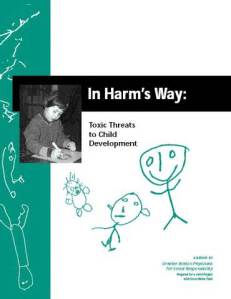
INHARMSIn the report “In Harm’s Way”, conducted by Physicians for Social Responsibility, found that it is estimated that nearly 17 percent of children under 18, in the US, suffer from one or more learning, behavioral or developmental disorders. These disabilities are clearly the result of complex interactions combining genetics, environmental and social factors during vulnerable periods of development.

The reason toxic exposure is important – is that it is a PREVENTABLE cause of harm.

People suffering from illness are desperate for help and all too often, the root of their issues is unknown.  Therapists and health practitioners see individuals with many of these symptoms every day.   Often these clients are referred to doctors or psychiatrists, who prescribe medications that, in essence, mask the symptom without getting to the core of the dis-ease. Often these prescriptions create other health problems and side effects, or as some people state, are not really that helpful.  There may be a better solution.

We need to move beyond diagnosing symptoms and get to the root of the problem or, in a perfect world, the problems would be prevented in the first place.

We can’t solve problems by using the same kind of thinking we used when we created them.

 Albert Einstein

CONSIDER:

What if, by eliminating toxins and making wiser personal choices in the products we make, we could begin to heal our bodies from dis-ease?

What if, by making wiser choices, people can begin to be in control of their health?

What if, by making healthy choices, an individual might begin to experience greater physical and mental wellbeing?

What if the choices that people were making in their diets, personal care and home cleaning products were contributg to, if not causing, depression, anxiety, emotional disturbances, ADHD, anger, behavioral problems in themselves and/or their families?

What if, by starting at the foundation, perhaps all the other things we do in therapy will also have a lasting effect instead of sending the person back out into a sick/toxic environment?

Read how seven people improved their wellbeing and tips for how you can too! My book is available at Amazon and other online retailers.  Why are People Turning Green 

Follow Eden Living on Facebook